What Do People From Spain Look Like? A Realistic Guide
Table of Contents

Many people search for “what do people from Spain look like” expecting one clear answer. In reality, Spanish people show a wide mix of physical features because Spain has a long history of migration and mixing. This guide explains the most common traits, regional differences, and why simple stereotypes about Spanish looks are misleading.
Why There Is No Single “Spanish Look”
Spain is a country, not a single ethnic type. Over many centuries, people from different parts of Europe, North Africa, and the wider Mediterranean have lived on the Iberian Peninsula. That history created a lot of variety in skin tone, hair, and facial features.
Shared history, many different faces
Some Spanish people look similar to people from Italy, Portugal, or southern France. Others could be mistaken for people from northern Europe, Latin America, or North Africa. Many Spanish families even show a mix of features within one household, which makes any fixed idea about “the Spanish face” very weak.
Because of this, any sentence that starts with “Spaniards all look…” will miss the truth. What we can do is describe patterns that are common, while stressing that exceptions are normal and very common in daily life across Spain.
Common Physical Traits in People From Spain
Spanish people do share some broad traits with other southern European populations. These are general trends, not rules, and you will find many people who do not fit them at all. The goal is to notice patterns without turning them into strict labels.
Height, build, and facial structure
Many Spanish people have medium-height builds, brown eyes, and brown hair. However, you can also find very fair blond people and very dark-haired people with deeper skin tones. Facial features also vary: some people have straight noses and oval faces, others have rounder faces or stronger jawlines.
You can see high cheekbones in some regions and softer features in others. This variety reflects Spain’s mixed heritage over time and shows why “average Spanish look” is only a rough idea, not a strict rule.
Skin Tones: From Very Fair to Deep Olive
Many people imagine that everyone in Spain has “olive skin.” In reality, Spanish skin tones cover a wide spectrum, from very light to quite dark. Sun exposure can also make people look darker in summer than in winter, especially in coastal and southern areas.
How region and lifestyle shape skin tone
In northern regions, you may see more light or pinkish skin tones, similar to people in France or northern Italy. In southern and coastal areas, you often see more golden or olive tones, especially among people who spend a lot of time outdoors for work or leisure.
There are also Spanish people with very fair skin that burns easily, and others with deep brown tones who tan quickly. All of these are normal in Spain and part of daily life there, from mountain villages to big coastal cities.
Hair and Eye Colors in Spain
Hair and eye color are two of the most visible traits people think about when asking what people from Spain look like. Again, there is a wide range, with a few patterns that appear more often in some regions than in others.
From dark hair and eyes to light, striking contrasts
Dark brown hair is common across much of Spain, in both men and women. You will also see black hair, light brown hair, and natural blond hair, especially in the north and in some inland regions. Curly, wavy, and straight hair types all exist, often even within the same family.
Brown eyes are the most frequent eye color. However, green, hazel, and blue eyes are also present, sometimes very strikingly so. In some northern and northwestern areas, light eyes appear more often, but they are not limited to those regions and can be seen in many Spanish cities.
Regional Differences Across Spain
While you cannot draw a strict map of “looks,” some trends appear when you compare different parts of Spain. These are loose patterns, not hard borders, and there is overlap everywhere, especially as people move for study and work.
North, center, south, and islands at a glance
In the north (Galicia, Asturias, the Basque Country, Cantabria, Navarra), you may see more people with lighter skin, light eyes, and even natural blond or reddish hair. Many visitors say that some people there look similar to Irish, French, or other northern Europeans.
In central and southern regions (Castilla-La Mancha, Extremadura, Andalusia, Murcia, Valencia), you may find more people with olive or golden skin tones and dark hair. On the Mediterranean coast and in Andalusia, strong sun and historic contact with North Africa and the eastern Mediterranean also shape how people look. The islands, such as the Balearic Islands and Canary Islands, add more variety due to their own local histories and migration patterns.
The table below gives a simple overview of common visual trends in different areas of Spain. Remember that these are broad patterns and that every region includes many exceptions.
| Region | More Common Skin Tones | Frequent Hair Colors | Frequent Eye Colors |
|---|---|---|---|
| Northern Spain (Galicia, Asturias, Basque Country) | Light to medium, sometimes pinkish | Brown, dark blond, occasional reddish tones | Brown, hazel, green, some blue |
| Central Spain (Castilla y León, Castilla-La Mancha, Madrid area) | Light to olive | Medium to dark brown, some black | Mostly brown, some hazel and green |
| Eastern coast (Valencia, Catalonia, Murcia) | Light olive to golden | Dark brown, black, some light brown | Brown and hazel, some light tones |
| Southern Spain (Andalusia, parts of Extremadura) | Olive to deeper golden | Dark brown and black | Mostly brown, some hazel |
| Islands (Balearic, Canary Islands) | Wide range from light to deep brown | Brown, black, some lighter tones | Brown, hazel, some green |
These patterns help answer “what do people from Spain look like” in a regional sense, but they should never be used as strict rules. Movement inside Spain and migration from abroad mean that any region can show almost any mix of features.
What Do People From Spain Look Like in the Cities?
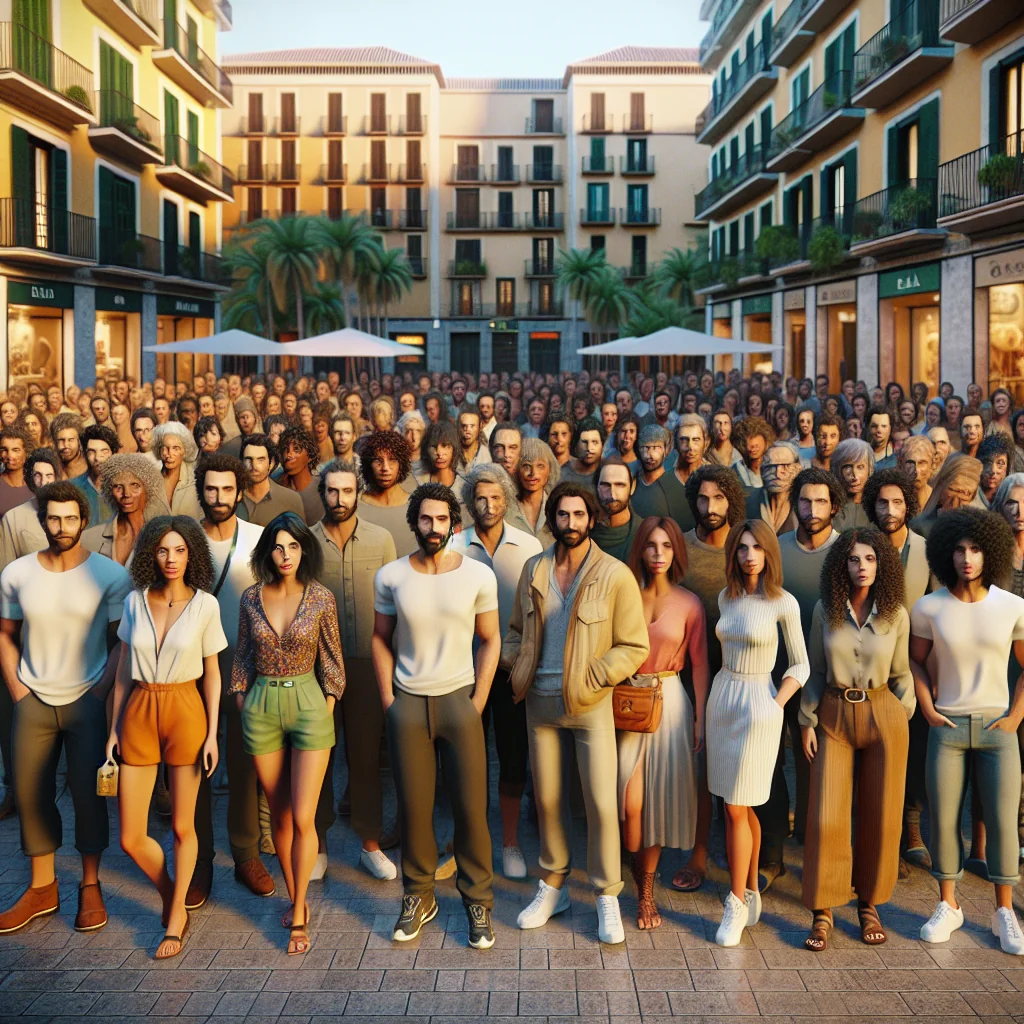
Large Spanish cities like Madrid, Barcelona, Valencia, and Seville are very diverse. In these places, “what people from Spain look like” includes Spanish citizens with family roots from all over the country and from other continents, often living side by side in the same neighborhoods.
Urban diversity and mixed backgrounds
You will meet Spanish people whose parents or grandparents came from Latin America, North and West Africa, Eastern Europe, or Asia. Many were born and raised in Spain, speak Spanish as a first language, and see themselves as fully Spanish, even if their appearance does not match old stereotypes.
Because of this, a street in Madrid or Barcelona shows a mix of skin tones, hair textures, and facial features that goes far beyond old ideas of what a Spaniard “should” look like. Modern Spanish cities give a good picture of how flexible national identity and appearance can be.
Spanish People and Common Stereotypes
Films and tourism ads often repeat a narrow image of Spanish people. This image usually shows a tanned person with dark hair, dark eyes, and maybe flamenco-style clothing. While some people in Spain fit that picture, many do not, and many never dress or live in that way.
Why stereotypes miss real Spanish diversity
These stereotypes ignore regional and ethnic diversity. They also erase Spanish people who are Black, Asian, Roma, or of mixed backgrounds. Many Spanish citizens today cannot see themselves in the classic “flamenco and bullfighter” image and feel that this picture tells only a tiny part of the story.
When you ask what do people from Spain look like, it helps to question these clichés. Real Spain includes surfers in the north, farmers in the interior, office workers in big cities, and people of many cultures and styles. Looks alone rarely tell you where someone is from inside Spain.
Ethnic and Cultural Diversity in Modern Spain
Spain’s population includes several historic groups, such as Castilians, Catalans, Basques, Galicians, Valencians, and Andalusians. These groups share the same country but have their own languages or dialects and cultural traditions. Physical features can vary slightly from group to group, but there is large overlap and constant mixing.
Historic groups and newer migrant communities
There are also Roma (often called gitanos) who have lived in Spain for centuries. Many Roma families have mixed with other groups over time, so you may or may not recognize them based on looks alone. Culture, language, and family ties are usually stronger markers than appearance.
More recent migration has added Spanish citizens with roots in Latin America, Morocco, other African countries, Eastern Europe, and Asia. So “Spanish” now describes a nationality and culture more than one fixed physical type, and the phrase “typical Spanish look” becomes less clear every year.
Key Points to Remember About Spanish Appearance
To sum up the most useful ideas, here are a few key points about what people from Spain look like. These points can help clear up common myths and give you a more accurate picture that respects real variety.
- There is no single “Spanish face” or body type shared by everyone in Spain.
- Skin tones range from very fair to deep olive and brown across the country.
- Brown hair and brown eyes are common, but blond, black, and light-eyed people are also Spanish.
- Northern regions often show more light features; southern and coastal areas often show more olive tones.
- Big cities include Spanish people from many ethnic and migration backgrounds.
- Old media images only show a small part of real Spanish diversity.
Keeping these points in mind helps you move away from narrow ideas about nationality and appearance. You start to see Spain as a place where many looks, histories, and identities share the same passport and help shape one shared society.
How to Think About “Spanish Looks” Without Stereotyping
If you want to describe what people from Spain look like, focus on patterns without turning them into rules. You can say that many Spanish people have brown hair and eyes, but you should leave space for the many who do not and avoid treating any look as “more Spanish” than another.
Simple steps for a more accurate view
The short ordered list below gives a clear way to answer questions about Spanish appearance in a respectful and realistic way. You can use these steps when you talk, write, or even plan images for a project.
- Start by saying that Spain has many different looks rather than one fixed type.
- Mention common traits, such as brown hair and eyes, as trends, not as rules.
- Include regional variety, like lighter features in some northern areas and more olive tones in many southern zones.
- Remember city diversity and people with roots in Latin America, Africa, Asia, and other parts of Europe.
- Avoid linking Spanish identity to just one skin tone, hair color, or style of dress.
A respectful way to think about Spanish appearance is to see “Spanish” as a shared culture and citizenship rather than a strict physical template. In short, people from Spain look like a wide mix of southern Europeans, with touches of northern Europe, North Africa, Latin America, and beyond. That mix makes Spanish society rich and hard to sum up in one simple picture.