Belgium Christmas Traditions: How Belgians Celebrate the Festive Season
Table of Contents

Belgium Christmas traditions mix Catholic customs, regional culture, and cozy winter habits.
Many people know Belgium for chocolate and waffles, but the Christmas season adds markets, folklore, and rich family rituals.
This guide explains how Belgians celebrate from early December through New Year, so you can understand or even join these traditions yourself.
Two Gift-Givers: Saint Nicholas and Father Christmas
One of the most charming Belgium Christmas traditions is having two main gift-givers.
Children in Belgium often meet both Saint Nicholas and Father Christmas, each on different dates and with different meanings.
Saint Nicholas (Sinterklaas in Dutch, Saint-Nicolas in French) visits on 6 December.
He is seen as a saint who rewards good behavior and is linked to school and family values.
Father Christmas (Kerstman or Père Noël) is closer to the global Santa image and comes on Christmas Eve or Christmas Day.
Many families focus gift-giving on Saint Nicholas, especially for younger children.
Some families then keep Christmas gifts small and simple, like books, clothes, or shared experiences, to keep the focus on the holiday meal and time together.
Saint Nicholas Day: Shoes, Carrots, and Songs
The build-up to 6 December is a highlight of Belgium Christmas traditions, especially in primary schools and homes with young children.
The rituals around Saint Nicholas are detailed and full of small, repeated gestures.
In late November, children place a shoe by the fireplace, radiator, or door in the evening.
They leave a carrot or sugar lump for the saint’s horse, and often a drawing or letter for Saint Nicholas.
Parents may add a glass of beer or wine “for the saint,” a wink to adults.
Children sing traditional Saint Nicholas songs before bed.
The next morning, they often find small treats: tangerines, chocolate coins, marzipan figures, and speculoos biscuits.
On the night of 5 December, the main gifts appear, sometimes with a personal letter from the saint praising good behavior and gently noting areas to improve.
Advent and Winter Atmosphere in Belgian Homes
Advent sets the mood for Christmas in many Belgian households, even if families are not very religious.
The focus is on light, warmth, and small rituals that mark the weeks before Christmas.
Some families use an Advent wreath with four candles, lighting one each Sunday before Christmas.
Others use an Advent calendar with chocolates, tea bags, or small toys behind each window.
These daily or weekly actions help children feel the season building up slowly.
Belgian homes often use soft, warm lights rather than very bright decorations.
Candles, fairy lights, and simple window stars are common.
In many families, the Christmas tree appears after Saint Nicholas Day, so the two traditions do not overlap too much.
Christmas Markets: From Brussels to Small Town Squares
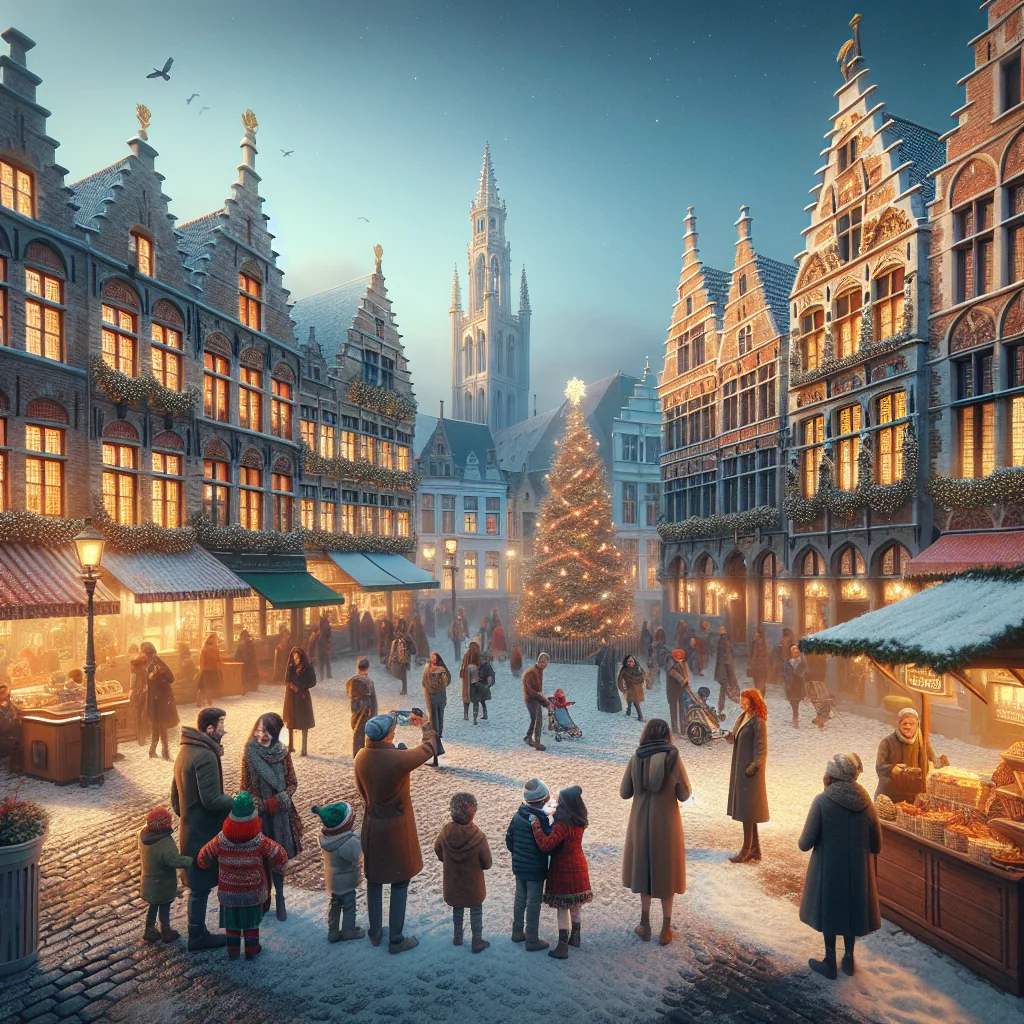
Christmas markets are now one of the best-known Belgium Christmas traditions for visitors.
They mix local crafts, food stalls, and winter activities like ice skating or small fairground rides.
Brussels hosts a large market called “Winter Wonders,” with wooden chalets, a big wheel, and a sound-and-light show on the Grand Place.
Other cities, such as Bruges, Ghent, Antwerp, and Liège, have their own markets with regional touches.
Smaller towns often set up a few stalls on the central square for one weekend or a few days.
People visit markets to meet friends, drink warm drinks, and enjoy the atmosphere more than to shop.
Mulled wine, hot chocolate, local beer, and snacks like waffles or tartiflette keep visitors warm in the cold evenings.
Festive Foods at the Heart of Belgian Christmas
Food is central to Belgium Christmas traditions.
The main feast usually happens on Christmas Eve, with a long dinner that can last several hours and often includes several courses.
Typical Belgian Christmas Eve Menu
Menus vary by region and family, but some dishes appear often.
Many families mix classic Belgian recipes with festive touches.
A common starter is seafood, such as grey shrimp croquettes, smoked salmon, or oysters.
For the main course, people often serve roast poultry like turkey, capon, or guinea fowl, usually with a rich sauce.
Game meat, such as venison, may appear in some homes, especially in the Ardennes.
Side dishes often include croquettes, gratin potatoes, red cabbage, or green beans wrapped in bacon.
Dessert is frequently a “bûche de Noël,” a Christmas log cake made with sponge and buttercream or mousse, decorated to look like a wooden log.
Sweet Treats: Chocolate, Speculoos, and Cougnou
Sweet foods run through the whole season.
Belgian chocolatiers create special Christmas collections with pralines shaped like stars, trees, or snowmen.
Speculoos biscuits, spiced and crisp, are linked to Saint Nicholas but stay popular all winter.
Bakeries also sell “cougnou” (or “cougnolle” in some regions), a sweet bread shaped like the baby Jesus, usually eaten for breakfast or as a snack around Christmas.
Many families exchange small boxes of chocolates or biscuits when visiting friends or relatives in December.
These simple gifts keep the focus on sharing and hospitality rather than big, expensive presents.
Religious Services and Cultural Events
Belgium has a Catholic history, so church services still form part of Christmas for many families, even if they attend only once a year.
Others prefer secular events, such as concerts or light shows.
Midnight Mass on Christmas Eve remains a strong symbol.
Some families go together before or after their festive meal.
Churches may host choir performances, nativity plays, or organ concerts that attract both believers and visitors who enjoy the music.
In some towns and villages, children or local groups stage nativity scenes.
These may be live, with real people and animals, or artistic displays inside churches.
They help keep the religious story visible alongside the more commercial parts of the season.
Regional Differences: Flanders, Wallonia, and Brussels
Belgium Christmas traditions share a common base, yet practices can look slightly different in Flanders (Dutch-speaking), Wallonia (French-speaking), and Brussels.
The core ideas stay the same, but names, songs, and small habits change by language and region.
Here are some key regional differences in how Belgians celebrate Christmas.
The table compares names, languages, and special touches that shape each area’s celebrations.
Regional variations in Belgium Christmas traditions
| Region | Gift-Giver Name | Language of Songs and Carols | Notable Local Touches |
|---|---|---|---|
| Flanders | Sinterklaas & Kerstman | Dutch | Strong Saint Nicholas focus; Dutch carols; coastal towns with light displays |
| Wallonia | Saint-Nicolas & Père Noël | French | Liège “Village de Noël”; French carols; rustic dishes in Ardennes |
| Brussels | Both versions used | French, Dutch, and others | Multilingual markets; international food stands; mixed customs |
These differences reflect Belgium’s languages and local culture rather than deep divides.
Many families also mix customs if parents come from different regions or countries, so a single household may use two names for the same figure and sing carols in several languages.
New Year’s Eve and “New Year’s Letters”
The festive season in Belgium continues beyond Christmas into New Year’s Eve and New Year’s Day.
These dates bring their own traditions, especially for children.
On New Year’s Eve, adults often gather with friends for another long dinner, sometimes followed by fireworks or street celebrations in larger cities.
The food can be as rich as on Christmas Eve, though the menu may change, for example to cheese fondue or gourmet plate grills.
A special custom for children is the “New Year’s letter” (Nieuwjaarsbrief / Lettre de Nouvel An).
Children write or decorate a letter to their parents or godparents, promising to be kind, work hard at school, or help at home.
On New Year’s Day, they read the letter aloud, often standing on a chair, and receive money or a small gift in return.
How to Experience Belgium Christmas Traditions Yourself
Visitors and new residents can join in many Belgium Christmas traditions with a few simple actions.
The steps below give a clear path from early December through New Year.
- Plan to arrive before 6 December if you want to see Saint Nicholas events in schools, shops, and town squares.
- Visit at least one major Christmas market, such as Brussels, Bruges, or Liège, and try local food and warm drinks.
- Book a festive dinner or prepare a home meal with seafood, roast poultry, and a Yule log dessert.
- Take time to see a church service, concert, or nativity scene, even if you are not religious.
- Join New Year’s Eve gatherings in cities or with local friends, and look for fireworks at midnight.
Following these steps helps you feel the rhythm of the Belgian festive season.
You can keep the parts you enjoy most and blend them with your own family customs in future years.
Key Belgium Christmas Traditions at a Glance
To help you remember the main customs, here is a simple overview of the most important Belgium Christmas traditions.
These points highlight what shapes the season for many Belgian families.
- Early December focus on Saint Nicholas with shoes, songs, and sweets for children.
- Advent rituals with calendars, candles, and soft lighting in homes.
- Christmas markets in cities and towns, with food, drinks, and crafts.
- Festive meals on Christmas Eve, often with seafood, roast poultry, and a Yule log.
- Sweet treats like chocolate, speculoos, and cougnou bread throughout the season.
- Religious services and cultural events such as Midnight Mass and concerts.
- Regional variations in language, songs, and market style across Flanders and Wallonia.
- New Year’s letters from children to parents and godparents on 1 January.
Whether you visit Belgium in December or want to bring some of these customs into your own home, these traditions offer many simple ways to create a warm and meaningful Christmas season.
Focusing on light, shared meals, and small rituals can make the holidays feel rich without needing anything very grand.